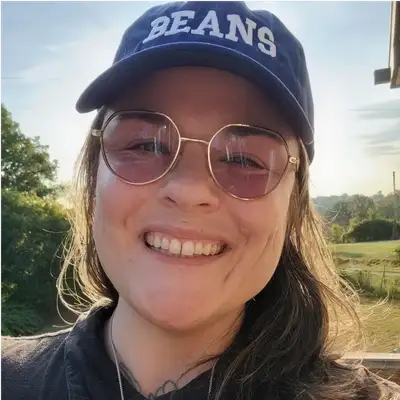
Writing the manual on startup docs with CT Smith
Kate Mueller: [00:00:04] Welcome to The Not-Boring Tech Writer, a podcast sponsored by KnowledgeOwl. Together, we hear from other writers to explore writing concepts and strategies, deepen our tech writing skills, get inspired, and connect with our distinctly not-boring tech writing community. If you’re passionate about documentation, you belong here, no matter your job title or experience level. Welcome!
Kate Mueller: [00:00:29] Hello my lovely, not-boring tech writers. Today, I am so excited to welcome to the podcast someone who I previously only knew via LinkedIn because I’m an antisocial misanthrope, and also because I really like following people who say interesting things. And I would say we are different kinds of tech writers in that she is super into tooling and I am not super into tooling. And so with our powers combined, I suspect that we probably could take over the world. But I’m super excited to welcome to the pod today, CT Smith. CT, thank you so much for being here.
CT Smith: [00:01:04] Thank you so much for having me. I caught a couple episodes of The Not-Boring Tech Writer before, and I was like, I think I’d like to talk to her.
Kate Mueller: [00:01:11] Even though you keep telling me that you are a boring tech writer! You know, this is why we do these interviews so that you can try to prove how boring you are. And at every point I’ll be like, actually, that’s not boring at all. That’s pretty cool. That’s pretty interesting. So maybe let’s get into one of the first questions that often reveals that you are not boring, which is: what is your tech writer villain origin story? How did you get started in this? Were you dreaming of this as a child? Did you stumble into it weirdly as an adult? How did it happen?
CT Smith: [00:01:43] I actually was dreaming of it as a child, funny enough.
Kate Mueller: [00:01:47] My first ever person who has said yes, I wanted to be this when I grew up.
CT Smith: [00:01:51] I absolutely wanted it. So I think it was third grade. I was probably 8 or 9 years old, and I remember the teacher–we were doing–there’s an activity some primary school teachers do with their kids where they get you to describe how to make a peanut butter sandwich. And I remember vividly the classroom that I was in. And I remember being the only kid that gave the teacher good enough instructions to do the task. So some kids were like, take the peanut butter and put it on the bread, and she took the peanut butter jar and put it on the bag of bread. I walked her through the whole thing. I was like, well, first gather up all your supplies, then get two pieces of bread out of the bag. Then open your peanut butter jar, get a knife, put it in there, make sure you have a towel to wipe the knife if you need more peanut butter because you can’t put crumbs back in the jar.
CT Smith: [00:02:39] And so I remember her looking at me and going, “You need to be a technical writer.” And at the time, I was like, okay, I’ll just grow up and be a tech writer. But I didn’t know what that was. And so the thing that really had an impact on me as a child was I was obsessed with catalogs. So I ordered the J.Crew catalog. The L.L.Bean catalog was a favorite. Those big Sears catalogs that they used to send out. My dad had a bunch of industrial supply and tractor parts catalogs that would come like the McMaster-Carr catalog, which was a feat of information architecture, for sure. But I was obsessed with those. And I was like, man, when I grow up, I want to just do whatever that is. And I took some detours. I got a degree in philosophy. I worked as a waitress for a really long time. I did a bunch of things until I found a way to be a tech writer. And so eventually I was able to turn it into like, I am a tech writer. So that’s how I got here. And yes, I always did want to be a tech writer. I just didn’t know what it meant fully.
Kate Mueller: [00:03:36] I didn’t know what it meant, but I kind of knew that this is what I was into. I’d never thought about the catalog angle. I must also admit to having a huge fondness for reading product descriptions in catalogs as a child.
CT Smith: [00:03:51] Oh yeah! Item numbers, I was obsessed with item numbers. And at one point, I had memorized most of the L.L.Bean catalog in like 1992. I was so obsessed. I’m still kind of obsessed. It’s just nobody does paper catalogs really anymore.
Kate Mueller: [00:04:05] No they don’t. That entire experience is missing for this generation of up-and-coming tech writers, I think. And it’s a tragedy, frankly. Yeah. I also have a deep envy of the folks who do higher-end food descriptions like wine or teas. Even still, as an adult, I will read those and be like, oh man, it’s beautiful. I mean, I don’t get that taste at all when I drink that tea. However, the thing you’re describing sounds incredible and boy, would I love to drink that.
CT Smith: [00:04:37] Whose job is that?
Kate Mueller: [00:04:38] I have no idea.
CT Smith: [00:04:39] I love reading, like, I bought some fancy olive oil recently. It was infused and the descriptions were so lush. I was like, I can’t not buy this. And I just had some bread. Actually, it was a shallot infused olive oil. It’s so good.
Kate Mueller: [00:04:56] It sounds amazing.
CT Smith: [00:04:57] But it sounded like a vacation. When I was reading the description, I was like, I want whatever you’re selling right now because that sounds awesome.
Kate Mueller: [00:05:03] Yes, if you’re a trained sommelier and you also do marketing, you are the person writing the wine descriptions, right? Because it’s both being able to identify the flavors, but also having the language to make it sound enticing. Okay, so that’s your, I-actually-was-a-child-who-wrote-instructions-and-enjoyed-them-and-was-successful-at-it. I have heard of that exercise not being done at that young of an age, but I’ve definitely heard it being done at like the high school or college level and having it be deeply humbling for folks. So the fact that you nailed it as a child is amazing. That’s strong tech writing chops there from the get-go. And so that’s kind of your past. What are you up to now? What is your current role?
CT Smith: [00:05:49] So I actually just started a new job yesterday. And so I’m not really ready to talk about my role there because it’s different from every role that I’ve done before. I’m owning a lot more deliverable types. Okay. So I don’t have much to say about that.
Kate Mueller: [00:06:06] You’ve been there 24 hours. You’re allowed to not quite know what that looks like yet. That’s acceptable.
CT Smith: [00:06:10] I’m going to be owning sales enablement and API stuff and customer-facing docs and things like that. It’s a much more expanded role than typically I would have. So my last job, I owned developer docs and later on, all of the customer-facing product documentation and developer relation type stuff for a payments company. I’ve had a lot of different roles though in tech writing. I’ve worked in EHR, so electronic health record software. We still did print manuals there, which was a whole thing. And so I did learning design and print manuals there. And then I worked at Salesforce for almost eight years. And that was a whole thing. I got really good at DITA, and got to train people on DITA. So that was super fun. Every job I’ve had has been fun for different reasons. So I feel like I’ve had a lot of different kinds of tech writing software jobs.
Kate Mueller: [00:07:06] Which is great. I mean, I think one of the advantages to the field broadly is that there are so many different flavors of the role. It can be really broad, it can be very niche. You might be looking at very different tool sets. And I think for some folks, you know, they find that niche and they just stick with it forever. But then I think there’s people like yourself who are just like, hey, I’ll take whatever. You want me to learn a totally different way to think about structuring my content? I’m on it.
CT Smith: [00:07:34] I’m basically a method actor. I’m now at a cybersecurity company and I’ve never worked in cybersecurity before. And I’m like, okay, so I first reached out to everybody I know in cybersecurity. I was like, hey, a lot of docs in cybersecurity are private. So can you tell me what makes good documentation? So I pumped all my contacts for info. And then I’m working through the certification course. I don’t know if I’m going to do the certification or not, but for one of the entry level certifications. The reason being is I have to understand what these users need. And I don’t understand that because I’ve never worked in security before. But I think the cybersecurity space is really interesting and I’m stoked about being able to get in and wear that like a skin and kind of figuring out. Understanding all of the different reader types that I’m going to be serving is really exciting for me.
Kate Mueller: [00:08:23] Yeah. I love the idea of thinking of your role as a tech writer as being a method actor, because it totally is in terms of like, I’m stealing that idea. It’s beautiful.
CT Smith: [00:08:33] Good, take it!
Kate Mueller: [00:08:33] It’s incredibly effective, but it very much is like you are learning an entirely new domain and you have to submerge yourself in that so that you can speak to your reader needs on it. It’s that I have to be humble enough to recognize that I know nothing about this, but also motivated and curious enough to actually learn my shit so that I can write good docs.
CT Smith: [00:08:56] Absolutely. And I think that’s what’s exciting about tech writing for me is that if you don’t like your industry, just move to a different one and learn everything you can about that. Because I did a really great job in payments, but I’m not passionate about payments. Cybersecurity I find way more interesting. So like, how much better at my job am I going to be just because I’m interested in it enough to learn everything about it. And I’m curious enough to really dive in. So I think that curiosity is a super underrated trait for tech writers. And so whenever I’ve been on teams where I wanted to hire somebody to work with me, curiosity is the thing that I hire for because you can’t do a good job unless you’re curious. In my opinion, I’m not the arbiter of good tech writing, though.
Kate Mueller: [00:09:41] I’m not sure there is a single arbiter. But I think you’re right. I’ve now been doing these interviews for two years, and it is one of those themes that comes up constantly, that ability to be curious. Also, the ability to kind of manage your own learning to be able to say you cannot teach curiosity, and you can’t really teach somebody how to be a good self-directed learner. You have to find your way through those weeds yourself. And once you get there, hopefully you do a good job.
CT Smith: [00:10:07] Yeah, I can help with that. Not necessarily the self-directed learning, but for example, I had a junior writer that I hired. He had very little work experience total. He had left college for personal reasons and he needed a job. And he is so good at code. Like he is a hobbyist. He knows every programming language ever. And he had a really great GitHub where he had all these projects, whatever, they had decent readmes. And I was like, okay, so you got good bones. I can polish you up. And so I hired him thinking that like, I’m just going to teach him how to write or whatever. And then I realized there’s a lot of people that don’t have, I don’t want to call it executive function. He didn’t know he was supposed to answer his emails; he didn’t know he was supposed to be checking for calendar invites, because he had never worked in an office before. And there was just a lot of stuff. He wasn’t keeping up with his work list.
CT Smith: [00:11:01] He was losing things all the time. And I was like, okay, bud, I’m going to teach you how I keep track of all my work and I’m going to teach you this and this and this. And so I basically taught him how to do to-do lists and it sounds so simple, but I basically taught him my trick for making sure that you’re always prepped for presentations. I taught him my presentation method. I taught him how I do my daily to-do list and my logs and stuff, and so that I always have receipts. And he was like, how are you so organized? I’m like, because I know what day I said what to whom. If I said, I owe you this, it’s going on my calendar and I’m going to have it done by then. And so I just taught him a lot of my copes for keeping up with the workload. And so that part you can absolutely teach people who are willing to learn, but I can’t teach you to be curious.
Kate Mueller: [00:11:47] He sounds like he already had that curiosity. I mean, if he’s a hobbyist in coding languages that had to have come from someplace inside.
CT Smith: [00:11:55] That’s why I hired him, even though he had none of the other skills that I needed. And I had to teach him all of the other skills, and it was super successful. He’s actually at a customer conference right now doing a presentation. So I’m super proud of him. And honestly, I don’t want to make a person sound like a project, but he really was like the proof that you can learn stuff. You can learn how to function if you want to. It may look different than how someone else functions, but you can learn new tools to help you get through life. And his portfolio in quotes showed that he was curious about a vast array of things, but needed help on the execution part, which you can learn.
Kate Mueller: [00:12:37] Yeah, the execution piece is absolutely a thing you can learn. Particularly because a lot of execution, there are a variety of different ways to solve that problem. And so you can, you know, find a mentor or a process that feels like it’s a good fit for you and then tweak it to fit you.
CT Smith: [00:12:53] Yeah, absolutely. And that was part of the process. It took him two and a half years to land on what he’s doing now, which works really well for him. So he started out with my basic process and we would meet up and I’d be like, okay, how’s it going? He’s like, actually, you know, this isn’t working for me. I was like, change it, dude. This is not an edict. The whole point was just to get you started and then you find what works for you, but you haven’t had a range of life experiences that can give you ideas about where to start. So I’m just giving you a starter pack. You do the rest. And so he finally figured out something that worked for him and it was great. And I’m super proud of him. Shout out to Elijah.
Kate Mueller: [00:13:31] Strong work, Elijah. Way to be curious out of the gate. And also a way to eventually adapt to working in an office, which is sometimes a really hard shift if you’ve not done it before.
CT Smith: [00:13:42] Yeah. It’s tough. I went from being a Waffle House waitress on third shift to working at a Fortune 500 in an office. So I’ve done it. Yes I have. Yes, I have fought grill operators. I didn’t start it, okay? I didn’t start it.
Kate Mueller: [00:13:57] A likely story. You stood up for yourself.
CT Smith: [00:14:03] I certainly did. I’ve been chased through the store by more than one drunk guy, so.
Kate Mueller: [00:14:07] Hopefully a skill set you haven’t had to use a lot as a tech writer.
CT Smith: [00:14:11] I haven’t had to use them in a while, no, but hopefully your listeners are familiar with Waffle House, which is a chain of diners, mostly located in the American southeast, but there are locations elsewhere. There’s one in Pennsylvania. There’s one in Arizona that I know of. And so it’s got a special vibe. After hours there’s usually fighting. And it’s a spot where a lot of folks go once the clubs close.
Kate Mueller: [00:14:35] Yeah. So you get a lot of folks who are often very drunk, very drunk, who are like, I’m gonna go eat carbs maybe, or just grease and potentially pick fights with other people in the establishment.
CT Smith: [00:14:47] One hundred percent. But I did that for like four years.
Kate Mueller: [00:14:49] So you were well prepared for like prickly software developers or.
CT Smith: [00:14:55] Oh, absolutely.
Kate Mueller: [00:14:57] Yep. That’s a skill set. Conflict resolution or dissolution, such as the case may be.
CT Smith: [00:15:03] I have never had to fight any of my coworkers in an office, though.
Kate Mueller: [00:15:07] Thank goodness.
CT Smith: [00:15:08] Or defend myself from being punched. So that’s pretty cool.
Kate Mueller: [00:15:11] At least not physically punched.
CT Smith: [00:15:13] Not physically punched.
Kate Mueller: [00:15:14] Passive aggression, perhaps, but no.
CT Smith: [00:15:17] I used to work with this one grill operator because I was a waitress, and if you called an order while she wanted to go take a smoke break, she would slam her utensils down on the grill, take off her Waffle House shirt, and be like, out back. I’m like, come on. She had it in her head that the rule was, if you took your Waffle House uniform off, that it was okay to fight and you wouldn’t get fired. I’m like, I don’t think that that’s a real rule.
Kate Mueller: [00:15:41] I’m pretty sure you’re not supposed to fight at all in or out of uniform.
CT Smith: [00:15:45] I’m not saying that you should fight at work. I’m just saying working in an office has been relatively easy compared to Waffle House.
Kate Mueller: [00:15:55] And if you’ve not had the cultural experience of Waffle House at like 3 a.m., consider research here. So does the label tech writer resonate for you, CT, or is there something you prefer to use?
CT Smith: [00:16:05] You know what? It used to resonate with me fine. Until recently. And I think that the whole industry, the whole field, has kind of expanded in weird ways since AI became very accessible to more people. It no longer resonates with me. I’m looking at myself more as a context custodian and a tool builder than a tech writer, because I’m gonna get hate mail for this, but AI can “just write” now. The quality, it depends on your inputs and how you’re handling the outputs, but you can. There are ways, if you are talented and skilled enough and savvy enough to make AI draft content the way you want it to for tech content, for example. My job has kind of evolved to where I am making, I’m owning the systems that are helping create that AI-generated or AI-drafted content. And that is more where I see myself now more as a custodian of like, how do I keep these AI systems? I actually have stickers printed for this new fake agency I made up called the Slop Prevention and Control Agency. And there’s a whole website you can go to. And it’s like, it just defines slop. And it’s geared towards tech writers. So it defines what slop is. And some of the tools that I have built internally or on my own side projects and things like that, how I kind of control how to prevent that slop or how to fix other people’s slop, because that’s just the way things are headed. You’re not going to be able to make people stop using AI to create content. I’ve been saying more like, oh, you know, I kind of own a lot of context and content and the tooling surrounding it because it’s just beyond just regular tech writing now. And don’t get me wrong, I think tech writing is very important, obviously, but I just don’t think that the name fits what I’m doing anymore.
Kate Mueller: [00:18:04] Yeah. And that’s fair. I mean, what’s happening at an industry-wide level, I think, is also the kind of thing that happens to you if you’ve been at a company for a long time, which is that things evolve and evolve and evolve, and suddenly you kind of hit this point where you’re like, the job title I have is not actually reflective of how I spend the majority of my time anymore.
CT Smith: [00:18:27] 100%. That’s a really good way to phrase it.
Kate Mueller: [00:18:30] And so in the beginning, you pick a job title or you apply for a job title that seems discrete and nicely defined, and then you get three years in and suddenly you’re like, I do so much now and my original job is only like 20% of what I’m actually doing. And the other 80% is actually way more important. How do I even talk about that? And I think this is the thing that collectively, as an industry, people have to answer for themselves about how deep into the AI pool you want to dive and where you want to go with that and to figure out kind of where your place is with that, which for me, I’m still very on the fence, very overall resistant because I still really love writing. Therein lies the rub for me.
CT Smith: [00:19:16] I’ve never loved writing. I liked explaining stuff. And as I got deeper into my career, for the past like ten years, I’m just like, I just wish I had a job where all I did was build tooling because I like building doc tooling. And I also am a really good editor. And so I prefer editing over writing. And, you know, a lot of people don’t start out as editors. You have to start out as a writer and earn your stripes or whatever. But now I get to be an executive editor who just builds tools all day. And I don’t have to fool with the writing. I like the research part, too. I think for me, my favorite part was doing the research and distilling everything and the information architecture and all of that. So the writing is just a very small part of it for me. And there are some people who are really into writing, and that’s okay. So the world takes all kinds.
Kate Mueller: [00:20:08] I actually taught before I got into tech writing, and I find at this stage in my life, I’m kind of getting back into the teaching side of stuff more into the instructional design, more into the whatever. But it’s hard for me to say if that’s entirely an organic shift back, or if it’s also me being like, well, that’s a thing that AI can’t do well yet. I think I’m a lot smarter about it now than I was 20 years ago when I did it the first time. So, you know, you bring a different amount of experience back to the thing, and it’s like you’re experiencing it for the first time, maybe doing it the I don’t want to say THE right way, but doing it a better way than you did it.
CT Smith: [00:20:46] Yeah. A different right way. There could be multiple right answers for the same issue.
Kate Mueller: [00:20:50] You have been working on your own doc tooling for a little bit and posting about it. Can you talk about that a little bit?
CT Smith: [00:20:57] Yeah. So it’s an open source tool called Shoalrun.
Kate Mueller: [00:21:00] So this is not a marketing pitch, y’all. This is the anti-marketing pitch.
CT Smith: [00:21:05] In fact it’s an art project. I mean it works. And I’m using Shoalrun now for all of my side projects. So I just published some benchmarking that I had done for different decision models. And so I used Shoalrun because it has agent skills built into the tool. And so agents know how to spin up a docs site really quickly or whatever, and how to install Vale and everything on its own. So I don’t have to fool with all of those, the setup. The agent does it for me. And so Shoalrun is an interesting tool. It’s where I took and fixed everything that I’ve hated about every doc tool because I’ve used dozens of doc tools in my career, and it’s everything that I’ve hated about doc tools that I’ve fixed here, or it’s things like I need something between DITA and just Docs as Code. I need something slightly more structured than Docs as Code, but DITA is overkill for this project or whatever. I wanted to build something that was not only useful for me and satisfied that itch, and I didn’t even have a use case for it yet, I just wanted to build something. And I wanted to build it to kind of express everything, fix everything, all of the wrongs in the doc tools.
CT Smith: [00:22:11] I built it to kind of deal with a lot of frustration that I have with doc tooling in general. And so it turned out it’s a very useful tool for me and I welcome people to use it. I don’t know what my maintenance plan is for it yet. I don’t know if I’m going to accept PRs or anything like that, but I actually just released the Alpha 15, version 15 today, this morning before I came to work. And I added where you can actually white label customer docs using your existing docs set, you can add different elements to the page to mark things for a specific SKU or a specific grandfathered feature. And then on the deployment side, you can have different configs for different customers to build bespoke white labeled sites for them. So that was something that I needed at some point in my career and didn’t have access to. And I was like, okay, well, how would I solve that problem now? That’s what I’m doing with Shoalrun. It’s more of an art project than anything. It is fully working, though. I’m having such a ball with it.
Kate Mueller: [00:23:05] So is it a little bit like a manifestation of your own docs pain points, and/or gripes or wish list? Like, boy, I wish there was a tool that did X. Let me just build that tool.
CT Smith: [00:23:17] 1,000%. I called it a self-esteem project. I just had to build it and I wasn’t trying to do anything with it. I was like, I wonder if I can.
Kate Mueller: [00:23:25] I think often there’s this perception that if you’re building a thing, you need to be building it so that you can make money off of it in some way, shape or form, right? Like, oh, this will be my side gig that becomes my full-time gig and then I’ll be able to quit my job or whatever. And that puts this weird amount of pressure on you to build a thing that other people want instead of like, hey, I have this pain point or this series of ideas that I just want to see what I could do, which is so much more freeing and fun.
CT Smith: [00:23:54] It’s 100% for CT. It is honestly so feature packed that it is probably overkill for most people, but that’s why there’s agent skills built into the package itself. Shoalrun is actively complicated because it was just everything that I wanted to fix about everything I’ve ever touched. I was like, all right, we’re building it.
Kate Mueller: [00:24:17] It’s like your docs tooling manifesto, but come to life like Frankenstein. Here are all the different pieces that I wish were different in the world.
CT Smith: [00:24:26] Yeah, but people can check it out. It’s completely open source. It’s just shoalrun.com.
Kate Mueller: [00:24:31] And we will link to this as well as pretty much everything else we talk about today in the show notes.
CT Smith: [00:24:36] I’m definitely not trying to incite anybody to use it or do anything with it. It’s just my art project that I’m really excited about.
Kate Mueller: [00:24:42] Often I feel like this podcast is mine, so I totally understand. I really feel like talking to so-and-so. I don’t know about what, but I really like, I kind of dig what they’re doing. So we’re just going to have them on the show and see how it goes. And then somewhere in the process, we end up with a really great episode. Then it seems like I have planned it and it’s beautiful and well thought out, but often it’s just motivated by, here’s somebody I want to have a conversation with because I can, because I’m curious, because I’m nosy. Because I really want to hear about their philosophy on what tech writing is or where the industry is going or what have you. And maybe this is a great time for us to take a break. So we will take a break and we will come right back.
Kate Mueller: [00:25:25] This episode is sponsored by KnowledgeOwl, your team’s next knowledge base solution. You don’t have to be a technical wizard to use KnowledgeOwl. Our intuitive, robust features empower teammates of all feathers to spend more time on content and less time on administration. Learn more and sign up for a free 30-day trial at knowledgeowl.com.
Kate Mueller: [00:25:48] All right, and we are back. So, CT, I have a burning question for you then, which is: if you weren’t really super enthused about the writing, why is it that you set yourself the task of writing a book that is a guide for people to stand up docs at a startup. That is a lot of writing, right?
CT Smith: [00:26:09] It’s so funny because I was on a different podcast a few weeks ago and the host was like, wow, I read it and it’s like, got a voice to it. How did you in the age of AI, how did you get it to sound like you so much? And I was like, well, I wrote it. I wrote the words myself. It’s not that I don’t love the writing. I did enjoy writing the book, for sure, I did it because I watch a lot of my friends. They’re founding things and they’re doing stuff or they’re at an early stage startup and they would all reach out, like CT, I am at this startup and I’m a product manager. There’s like six of us. I know we need docs. What do I do in the meantime? We can’t hire anybody. And so this happened to me enough that I was like, okay, I’m just gonna write a book about how to do this, and I’m going to make it as short as possible, and I’m going to make it as punchy as possible so you can actually do it. And so it’s got all the advice that I’ve given to my friends over the past few years when they’ve been like, hey, I’m in a bad spot.
CT Smith: [00:27:07] I’m owning the docs and I don’t want to. I just wanted to make it accessible for more people because I do think that docs are very important. And I do understand that a lot of places are not in a position where they can hire somebody to own the docs so early on. I wish they would, but that is not reality. And honestly, I was just playing the long game because like, if we get more companies thinking about docs early on that hopefully will employ more tech writers, keep more technical writers employed, have better quality documentation for humans and agents. Et cetera, et cetera, et cetera. So that was the subtext there. It was me going, okay, how do I help tech writers get hired? And then when they’re getting hired, they don’t walk into such a big mess. But I also just wanted to help people help their customers earlier on, and hopefully skip some of the chaos that comes with not having docs at a fast growing startup.
Kate Mueller: [00:27:57] So the book is called “Write the F***** Manual: A practical guide for standing up docs at a startup.” It is available free on the internet, yes? So we will link to it. I will be honest and say that even though it is short, because I have been in the process of buying a house and moving, I’ve gotten through like 70% of it. It definitely has a strong point of view, which I appreciate because I’m a very opinionated tech writer myself, and it is highly quotable. There are segments of it that I was like, oh, I want to send that to eight people right now that I can think of who I feel like have asked me about this, and I’m sure my snarky reply was a little bit more verbose and less effective. And I feel like CT’s nicely, tightly edited book is gonna do a better job at this. So let me just copy this two sentence excerpt and send it to you.
CT Smith: [00:28:46] I was so worried that people were going to think I was just subtweeting people that I’ve worked with the entire book. And I was like, no, no, I just, I need you to understand that the problems that I’ve outlined in the book, they all happened.
Kate Mueller: [00:28:58] Yeah. They’re real.
CT Smith: [00:28:59] Most of them happened at more than one place with more than one person. So I’m not calling anyone in particular out. It is just the way the world works.
Kate Mueller: [00:29:06] If you feel called out by this, I’m sorry, but also, you weren’t the only motivation behind me including this.
CT Smith: [00:29:17] They’ve reached out. They’re like, hey, was that my story? And I’m like, actually, no, it sounds like it was, but it’s not. Or, you know, it’s a combination of three events that happened simultaneously, so.
Kate Mueller: [00:29:27] Yes.
CT Smith: [00:29:28] I’m not calling anybody in particular out because everyone goes through this.
Kate Mueller: [00:29:33] Yeah. It’s an aggregation of those experiences, not a catalog of individual experiences. And if you’ve been in the industry long enough, you will recognize a lot of these scenarios. I think that was for me half the fun was I was like, oh yeah, that reminds me of X. That reminds me of that experience or that company or the company a very good friend worked at and boy, did that suck. Not the company, the experience, I should clarify. Yeah. But so okay, so the underlying motivation obviously is a very clear series of requests from folks. You have a pain point you want to address out in the world, but also you want to try to help people. How do you go from that to having an actual book? What was the process like for you?
CT Smith: [00:30:20] So how I did it was I actually used a tool called Falconer. I came up with, hey, Falconer, I’m writing a book. Here’s what I want to cover. Can you interview me to help me build the outline? And so I put it in interview mode and it would ask me questions to form the outline. Then I took that outline and I moved it over to. I first tried Scrivener, which is a writing software, but I think it’s not for me. I’m so used to working in just Neovim that I had to just go write in Markdown because I was like, I don’t even know how to use it. I don’t know how to use this editor anymore. So I did take the outlines because I outlined every chapter. I took those outlines and I put them in just a folder and I edited them in Markdown in just Neovim, which is a text editor, until I felt like this is a good direction to go into. And then I wrote from there. The outlines that I ended up writing off of were not…you could tell that they had come from the Falconer outlines, but they were not…so much evolved once I started actually writing.
CT Smith: [00:31:24] And then I just wrote until I was done, and when I was done, I printed the whole thing out. I used AI tools to build all my Pandoc conversion scripts because it could do way faster than me. And so I had the print version and the e-book version and the website version going all at the same time. I would periodically stop and just make sure that everything wasn’t getting too off the rails. And then I printed the whole thing out on vacation and I went and I bought myself red pens. I bought myself some red pens, and I just marked up the manuscript in meatspace by the Lazy River on vacation. And then I came back and I dictated all the changes to an AI tool that typed them in because I do have a little bit of hand weakness, and so typing gets old for me. I do a lot of dictation. So I dictated all the changes that I wanted to make, and then I read it several more times after that. And then I read it out loud three times.
Kate Mueller: [00:32:17] Wait, seven more times? You read it seven?
CT Smith: [00:32:19] I read it several times. That’s why I’m so tired of it. I probably read it eight times, to be honest with you, because I read it once in each format. So print and then online and then also e-book. I just. Because things happen.
Kate Mueller: [00:32:33] Yes.
CT Smith: [00:32:33] And I read it out loud. The first copy that I hand edited, I still have it because I was so worried that people were going to accuse me of using AI to write the book that I actually kept all my drafts from it. And now I realize when I was done, I was like, I don’t care if they think I used AI. I told you what I used AI for and if you don’t believe me, that’s like a you problem and not a me problem. The book is free.
Kate Mueller: [00:32:54] Yeah.
CT Smith: [00:32:54] So like, who cares? And then after that, I read it out loud a couple times because my final editing step always is to read it out loud. And I found a couple of issues that way. And then I got sick and I was like, I’m shipping it a day early, everybody, because I’m gonna go lay down.
Kate Mueller: [00:33:11] I actually remember this post.
CT Smith: [00:33:12] I am not missing a deadline, by golly.
Kate Mueller: [00:33:15] I don’t care how sick I am. This is going out.
CT Smith: [00:33:17] I’ve had a lot of friends who’ve written books and everybody’s process was so different. I was like, okay, well, you can’t really tell me how to do it, I guess. And then you just have to find what works for you. And I think that it worked fine for me. I don’t know where it is now, but I wrote it on a ThinkPad with no internet.
Kate Mueller: [00:33:37] No distractions whatsoever. No, I can’t go research that that’s going to be a to-do or whatever. Instead of letting me go down the rabbit hole.
CT Smith: [00:33:45] I had to schedule a lot of research because I had, I wanted to make a claim that I felt very strongly about. And I was like, let me see if anybody else is doing this. Nobody else had done it yet. And so I had to run a series of experiments and I ended up publishing it. It’s called luciddocs, but it’s just, what writing problems trip up humans like, you know, passive voice, pronoun confusion, things like that. Does the agent care about any of that? And it turns out the agent cared about some of it, but it did not care at all about passive voice, which made me so angry. So my hypothesis there was very wrong, but I ended up with a huge body of research that showed what tech writing rules definitely still apply for agents and which ones you have to care about less.
Kate Mueller: [00:34:30] By the way, I have shared that out to a ton of people just to be like, hey, because people do periodically ask me for guidance on this. And I’m like, I have not done the research, but I know someone who has.
CT Smith: [00:34:41] Yeah. Well, thank you for sharing.
Kate Mueller: [00:34:43] I appreciate luciddocs because I think it’s really clear and straightforward and also because there are some, like the passive voice piece, there are some nuggets in there where you’re like, this runs completely counter to what I would have expected.
CT Smith: [00:34:58] I know, and it hurts, right? Because I was like, certainly this is gonna shut ’em down. The agents are not gonna understand what’s going on. You know, what’s funny is that I’m still the expert, though, and I’m going to tell you we’re not using passive voice unless we have to. I don’t care if it doesn’t bother the agent. It bothers the humans.
Kate Mueller: [00:35:13] Yes, yes.
CT Smith: [00:35:14] It bothers me.
Kate Mueller: [00:35:15] It bothers me. And I’m the one overseeing this.
CT Smith: [00:35:19] Yeah. So that really aggravated me though, because I didn’t get the results that I thought I was going to get. I mean, a lot of things did work out the way I thought they would, but the passive voice thing really threw me. I published it anyway, because that’s what you do with research.
Kate Mueller: [00:35:32] Absolutely.
CT Smith: [00:35:34] Yeah. I had to do all that research to support some of my claims.
Kate Mueller: [00:35:37] It did really heavily drive home. Ambiguous pronouns are a thing that I know that I’m guilty of, and I tend to gloss over when I’m doing my reviews and reading through your findings on that, I was like, damn it, Kate. Okay, you need to have an explicit step. It seems like the impact is so huge for such a small thing. It’s such an easy to fix thing if you are actually aware enough to read for it, to review for it.
CT Smith: [00:36:08] Yeah. It’s like the complementizers in the Global English Style Guide. So basically it just boils down to using “that” when you’re talking about something. “That” needs more editing or whatever. And just including that word makes the sentence so much more intelligible for way more readers. And so I tend to overcorrect though, and I tend to be. This is why I don’t care about writing anymore, because I do overcorrect to the point that it sounds like a robot’s doing it because I wrote for translation for so long that you have to be very, very clear when you’re writing and you don’t have to be that clear in every situation, but I take it a little too far sometimes, which is why I’m kind of glad that I’m not doing as much writing because I’m overly literal sometimes and overly direct. And that is a benefit for a lot of, in a lot of writing situations. But it’s not in every and it’s hard for me to be flexible there.
Kate Mueller: [00:37:08] You now not only know CT’s tech writer villain origin story, but you know her villain weakness.
CT Smith: [00:37:15] I get a little too technical with it sometimes, and I forget that people have to read it.
Kate Mueller: [00:37:26] Okay, so you’ve read it realistically probably eight times. I want to talk very briefly. I just want to go back to this point that you read it out loud to yourself a couple times. And the reason I want to go back to this is because I think a) this is a process I do. So shout out to those of us who read things out loud. But b) to go back to your point about the other podcast host being like, how did you get it to sound so much like yourself? Reading something out loud is the fastest way to figure out where it doesn’t sound like you. For those of you who are die-hard listeners, and you listen to the solo episodes and it sounds like I’m probably just talking. I’m not. I write those episodes, and then I read them out loud about four times until I edit them so that it sounds like I’m not reading them out loud.
CT Smith: [00:38:19] That’s how I do my presentations.
Kate Mueller: [00:38:21] Yeah. And it’s like, particularly in an AI era, if you really want to sound like yourself, you have to actually sound like yourself. And a huge piece of that is hearing how you sound because you will, you know, a sentence can be technically correct in every way, but then when you hear yourself saying it out loud, you’re like, that’s not a thing I would say. That’s not how I would say that. That’s maybe how I would write it, but it’s not how I would say it off the cuff randomly.
CT Smith: [00:38:49] But that’s been part of my method since I started writing. I can’t remember who gave me that advice, but I think it might have been my thesis advisor.
Kate Mueller: [00:38:56] For your philosophy degree?
CT Smith: [00:38:58] Philosophy degree. Yeah. I think that he told me at some point because a lot of times you’ll want to present papers at conferences. And I think it was his advice to read it out loud. And that way you catch a lot of weird constructions or things that readers might get hung up on. But I also suck at reading out loud. I have a stutter when I try to do that, and so sometimes I have to sing them. It’s the same when I read to my kid, I have to sing. Otherwise I stutter a lot. And so that helps. I don’t know what part of my brain is wired up weird that makes that the case. But so basically I did sing the whole book or chanted.
Kate Mueller: [00:39:35] I am just imagining this and I love it. Like the musical version of Write the F***** Manual.
CT Smith: [00:39:40] Everybody’s like, when are we getting an audiobook? I’m like, you’re not ever.
Kate Mueller: [00:39:44] Ever. Ever. I don’t want the whole world to hear me singing my book.
CT Smith: [00:39:47] I cannot, I actually can’t read well out loud, which is why I have to memorize speaker’s notes and things.
Kate Mueller: [00:39:53] Did you sing it to a particular tune or do you just make it up as you go along?
CT Smith: [00:39:58] So I’m Eastern Orthodox and we have a lot of chanting in my religion, and so I just follow that typically. When I’m reading to my kid, though, I do a lot of just sing-song, just kind of whatever comes to mind. But that keeps me from stuttering. The unfortunate side effect, though, is that I’m not going to record an audiobook for anybody.
Kate Mueller: [00:40:23] Audiobook offering.
CT Smith: [00:40:25] It would be something for sure, but.
Kate Mueller: [00:40:29] I guess I also have a question. So you started with the Falconer interview and then got the outlines from that. How close to that outline format is the final product at this point? Is it fairly close or did it…?
CT Smith: [00:40:42] It’s kind of close. I dropped a chapter. I merged two chapters. I moved the chapters around, and some of the chapters cover more or less content than I originally had in the outline. Because my writing process, I should have noted this was like, I start with an outline and then basically build the writing on top of the outline. I expand each line until it’s a full thought. That’s how I think. And so I start with the outline, and then I literally just copy + paste the outline into a document and start writing on the outline. So things definitely got moved around several times, but the Falconer bit was very helpful for getting the idea out of my head and letting me ramble a little bit as a professional, and having the ideas kind of bundled up, like, here’s what you should talk about.
Kate Mueller: [00:41:26] So it’s an interesting use case because I think for me, that point of trying to generate the outline would actually be the sticking point, where I would second guess myself or I would not be sure what direction to take. And so having something else just arbitrarily, but based on my own thoughts, be like, here’s kind of what you should be talking about and where on there it belongs here earlier on. The idea is right, it’s just the location no longer makes sense based on how the rest of the thing has evolved. It’s an interesting approach.
CT Smith: [00:42:00] I don’t know. I’m booked out for now. So it was so hard. It was crazy because it was so short. I thought it was going to be really easy and it took so much out of me for some reason.
Kate Mueller: [00:42:10] How long from start to finish was it in total?
CT Smith: [00:42:14] I started in March, but then I got sick for like a month, and I really started to lean into it in May and late May. And so it took me all of June, and late July is when I started editing. So I was done reading it by July. So it took a couple months, but I had several false starts and stops because I just kept getting sick.
Kate Mueller: [00:42:34] Bodies sometimes are very inconvenient for some of these things. And did you get editorial feedback from anybody else along the way, or is it all kind of yourself?
CT Smith: [00:42:47] I had a lot of friends in the industry and outside of the industry who were able to give me feedback. I got a lot of developmental feedback from a couple of tech writers. I got a lot of developmental feedback from a few people who would be in the target audience for the book, which is like people who work at startups and are doing docs against their will.
Kate Mueller: [00:43:04] Docs against their will. Yes. Poor souls.
CT Smith: [00:43:09] The process was insane. It was painful for me because I had to do a project. I had to get it done. And once I’d done it, I’d already told everybody I was doing it. I was like, okay, you got to finish it. And I had all these other things going on in my life that I wanted to attend to, and it just didn’t work out.
Kate Mueller: [00:43:24] I’ve not written a book. I have started several and never finished them. So you’re really one up on me.
CT Smith: [00:43:30] Finish them! You’ve got to get them off your to-do list.
Kate Mueller: [00:43:32] I think a big piece of that is that like, it feels like there’s a chunk of your life that just needs to be about that so that you get through the project and it sounds like it was a rough couple of months for you, but also you did it. You got through the project and then got through the editing piece and actually shipped it and then got to move on with your life instead of having it sit there like poke at you periodically for the thing.
CT Smith: [00:43:58] Yeah, you got to get it done. Now it’s done. And getting it done felt so good. It was not a fun process though, and I understand why a lot of people I know who write books feel hamstrung by it, or like my friend Dave said he started a new company to avoid having to write a second book.
Kate Mueller: [00:44:20] I’m too busy with this company that I’ve started. I couldn’t possibly work on a second book.
CT Smith: [00:44:26] Everything that I do, I have to do it all the way. I can’t, I can’t, not all the way stuff. And so that’s a personal flaw though. And so whenever I’m working on a project, I become the project. And it was just really frustrating to just be a book for several months.
Kate Mueller: [00:44:46] I’d imagine it’s challenging to, for example, have a kiddo and have to be both a book and a parent at the same time.
CT Smith: [00:44:56] That was a lot of it because it was like having to. What I did was I ended up waking up like two hours early every day for several months to get the work done. And so it was just a lot because you can’t let it interfere with your personal life. If you’re a parent or even if you’re not a parent, it’s just, you know, it’s hard when there’s a small person that’s depending on you for a lot of things.
Kate Mueller: [00:45:16] So yeah, you don’t want the reason that they need therapy to be the fact that you wrote a book.
CT Smith: [00:45:22] No, I don’t want it to be mama’s book. I’m a loud person and, you know, kind of eccentric. So he’s going to need therapy for something, I’m sure, but it’s not mom’s book.
Kate Mueller: [00:45:31] Hopefully not.
CT Smith: [00:45:31] Yeah.
Kate Mueller: [00:45:33] I mean, also, the book was not that huge in terms of his entire life. You’ve got plenty more time to mess him up in other ways, CT. It’ll be fine.
CT Smith: [00:45:43] That’s true.
Kate Mueller: [00:45:46] I mean, it’s like less than six months. To a kid, that’s probably nothing. Yeah. So thank you for that. I will have to see if I can take on the idea of being a book for a few months and see what happens.
CT Smith: [00:46:00] Yeah, just get it done. And then people will ask you like, how did you do that? And then you can tell them it was awful. Or you can lie and say that you were built for that. I’m not going to do that though. If you’ve ever written a thesis, it’s essentially the same.
Kate Mueller: [00:46:11] Unrelated to the book or any of the rest of this conversation: are there any resources that you think are just generally really helpful for other humans, whether that’s tech writing related, whether it’s not tech writing related?
CT Smith: [00:46:25] Yeah. So actually in the book, on the free website version of the book, I do have a reading list in there that was very helpful for me as a baby writer.
Kate Mueller: [00:46:35] It’s in the appendix, right?
CT Smith: [00:46:37] Yeah, it’s somewhere in the appendix. There’s a lot of books, like Thinking in Systems by Donella Meadows, which is really good.
Kate Mueller: [00:46:42] Yeah. I noticed Abby Covert’s How to Make Sense of Any Mess, which is.
CT Smith: [00:46:45] Yeah. And that one, I would still encourage you to buy a copy of her book to support her, but How to Make Sense of Any Mess is available free online and the website’s really cool. So those are my favorite resources. That’s what I always tell people when they want to get into tech writing, they should read these things.
Kate Mueller: [00:46:59] Yeah, we will definitely link to that actually. Donella Meadows’ Thinking in Systems I had not heard of before. So I will have to add that to my personal reading list.
CT Smith: [00:47:09] It’s pretty good.
Kate Mueller: [00:47:09] And I guess, what is a great piece of advice that you’ve been given? Does not have to have anything to do with writing.
CT Smith: [00:47:17] Go slow. Think ahead. Don’t show off.
Kate Mueller: [00:47:22] That’s like how to live your life, period, I feel.
CT Smith: [00:47:25] Yeah, I was absolutely wasted at a party like 10 or 15 years ago, and I was at my college best friend’s. She had moved into this house that had been split into multifamily, and one of her neighbors was having a party and he had this girl over, and I was talking to her. And when I was drinking, I’d be like, so did your parents ever give you really bangin’ life advice? And she was like, yeah, my dad always says, go slow, think ahead, and don’t show off. And ever since I heard that, I have just thought about it every day. I don’t want you to go so slow that you don’t seize the day, but don’t make rash decisions. Think ahead and don’t showboat because you know that’s a good way to get cut down. And for me, those three things, I like to think about them because I did tend to make really rash decisions for a long time. And so once I was able to slow down and make sure I have the facts before I do something irreversible, that’s just stuck with me. And I tell my kid that all the time, go slow, think ahead, don’t show off. When he’s walking on a balance beam or something.
Kate Mueller: [00:48:34] Except more specifically than have fun, but don’t be an idiot. It’s very open to interpretation. Whereas that’s very concrete advice, I guess. Lastly, CT, if people have listened to this and like me are like, oh, I want to follow what CT is doing because she’s pretty cool or they wanted to get in touch. What are the best ways for them to do that?
CT Smith: [00:48:57] You can find me on LinkedIn. I’m fairly active there and also I blog over at docsgoblin.com and I think I’ve got an email somewhere on that site that you can contact me at. It’s got my reading list and everything like that. Everything I’m reading and all my projects and stuff that I’m working on. But yeah, LinkedIn because I’m there a lot. I’m always publishing weird research I’m doing that no one but me cares about.
Kate Mueller: [00:49:19] Not true.
CT Smith: [00:49:20] I ran almost 14,000 decision model calls yesterday.
Kate Mueller: [00:49:25] Hey, I love a lot of that research because it’s not a thing I will ever do. And so I love seeing someone else do it because then I can be like, oh, this thing. It’s not just me feeling like I should do this thing. Look, CT has done actual research that shows.
CT Smith: [00:49:39] I’m not an actual researcher. Use it all at your own peril. But I’m not going to lie about what I found. If the research doesn’t match my hypothesis, you’re getting it anyway.
Kate Mueller: [00:49:48] Passive voice being a fantastic example.
CT Smith: [00:49:50] Yeah, I’m still mad about that. It still irks me.
Kate Mueller: [00:49:55] Yeah. Damn you, AI, for being able to understand both active and passive voice.
CT Smith: [00:49:59] I can’t understand passive voice. Why is the AI able to do that?
Kate Mueller: [00:50:04] I find passive voice to be sometimes very nonsensical. There’s so much bad passive voice in the world that it understands it because that’s been a huge part of the models that it’s been trained on, I’m sure. But. Well, thank you, CT. I was like, I must have some really insightful, amazing way to close this and I just don’t. But you’ve been a delight. You have more than delivered on what I hoped you would be like to talk to in real life, for which I am deeply thankful. I’ve also deeply enjoyed Write the F***** Manual, even though I’m not quite finished with it yet.
CT Smith: [00:50:38] Okay.
Kate Mueller: [00:50:39] But it is many of the things that I want to say to people, but don’t say very well. So I love that it is out there in the world and I can be like this thing.
CT Smith: [00:50:46] I love to hear that. You know, I was validated when one person who has like founded a little startup messaged me and was like, I’m already doing what you said in the book and things are going really well. I was like, okay, then the price has been met, the price has been paid. I did a thing and it helped one person do what I wanted them to do. So I’m happy. That time of being a book was worth it.
Kate Mueller: [00:51:07] I think you kind of nailed the audience on it. Folks who are in a startup environment kind of have to do docs, aren’t necessarily writers themselves, and/or don’t have time to throw at the problem. How do you attack the problem in a way that’s actually going to be meaningful and impact on the work that you’re doing and going to help your customers and/or help your support team without feeling you have to commit like umpteen million resources? We will have links to everything that we talked about today in the show notes. So if you want to go check it out, please do. And CT, you are distinctly not-boring. I’m just gonna say it. You can keep arguing with me on the internet, and every time you say you’re a boring tech writer, I will be like, nope, nope, nope.
CT Smith: [00:51:52] All right. Well, thanks.
Kate Mueller: [00:51:53] You’re welcome.
Kate Mueller: [00:52:01] The Not-Boring Tech Writer is co-produced by our podcast Head of Operations, Chad Timblin, and me. Post-production is handled by the lovely humans at Astronomic Audio with editing by Dillon, transcription by Madi, and general post-production support by Been and Alex. Our theme song is by Brightside Studio. Our artwork is by Bill Netherlands. You can order The Not-Boring Tech Writer t-shirts, stickers, mugs, and other merch from the Merch tab on thenotboringtechwriter.com. You can check out KnowledgeOwl’s products at knowledgeowl.com. And if you want to work with me on docs, knowledge management coaching, or revamping an existing knowledge base, go to knowledgewithsass.com. Until next time, I’m Kate Mueller, and you are the not-boring tech writer.
Creators and Guests