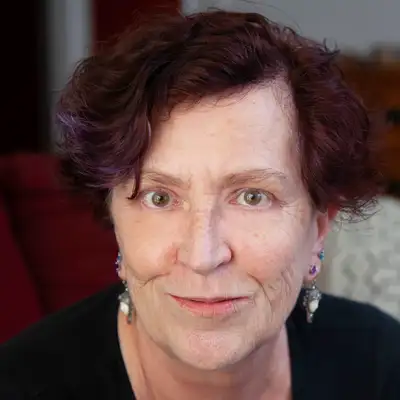
Telling the stories of women in technical communication with Sharon Burton
Kate Mueller: [00:00:04] Welcome to The Not-Boring Tech Writer, a podcast sponsored by KnowledgeOwl. Together, we hear from other writers to explore writing concepts and strategies, deepen our tech writing skills, get inspired, and connect with our distinctly not-boring tech writing community. If you’re passionate about documentation, you belong here, no matter your job title or experience level. Welcome!
Kate Mueller: [00:00:29] Hello, my lovely not-boring tech writers. I am so excited to welcome to the show today, a guest who I kind of only knew through LinkedIn for a long period of time. She is a technical content strategist. She also teaches technical communications to engineering students at the University of California, Riverside, and she is the author of a recently published book called “Women in Technical Communication: From Typewriters to Touchscreens: A History by the Women Who Did the Work,” which is, in fact, how she came onto my radar, once upon a time, looking at her call for submissions for the book process. So I am so excited to welcome to the pod: Sharon Burton. Sharon, thank you so much for being here.
Sharon Burton: [00:01:12] Oh, hello. And I did not author that book. I edited the book.
Kate Mueller: [00:01:16] Good correction, good correction. I think it really is an amazing capsule of women’s experience in the industry and how varied it is, and, and the very circuitous paths that a lot of folks have had doing this kind of work. But before we get into that, Sharon, I want to hear: what is your tech writer villain origin story? How did you get into this work back in the day to begin with?
Sharon Burton: [00:01:44] Well, my story is actually in the book. So I was a graduate student in cultural anthropology. I had done my field work. I was working towards taking my oral exams, doing my dissertation, all of that. And I was a single mom of a, I want to say 13 year old, 14 year old.
Kate Mueller: [00:02:10] Ooh, that’s a difficult age.
Sharon Burton: [00:02:13] We were living in family student housing. So that was beautiful. It was small but cheap, dirt cheap, which was wonderful. And we were starving to death. I knew this guy over in the comp-sci department because in part, our buildings were right next to each other. But one of the professors in my department did a lot of work with the comp-sci folks. And so there was a lot of cross-pollination. And so I knew Brian. And Brian and I were having coffee one day and he said, “Hey, this company I’m working with a couple of towns over is looking for somebody to write computer manuals.” And I went, “That sounds kind of boring, to be honest, but what does it pay?” And he said, “Oh, it pays $10 an hour.” And I went, “I’m your girl.” Because at the time, minimum wage was like $7 an hour. And the only job that I was really qualified for that I knew I could do was waiting tables.
Kate Mueller: [03:18] $10 an hour guaranteed sounds way better than that.
Sharon Burton: [03:21] Yeah. I mean, and it was like 20 to 30 hours a week. And I was like, that’s like $200-300 a week. My rent was $180 a month. So yeah, to give you some scale there, you know, and so I started working for this company. I really liked it. I found my people. The more I discovered my people, they gave me permission to be curious in a way that I had always, not always, but I had often been whacked on the head for because I’m interested in almost everything except for things like popular culture which I’m drop dead not interested in and please don’t tell me about it. La la la. I’m going to cry. But you know, science and engineering. And how did the world get to be the way it is? And by that I mean geomorphology and I mean anthropology and sociology, all of it. All of it. And we could just take computers apart and crawl around on the floor and it was wonderful. It was wonderful. The business was not so wonderful. They were doing interesting things. But the technology. And this was ’91, ’92, ’93 right in there where PCs were really a thing and Macs were starting to be really a thing. Not a lot of them, but they were a thing.
Kate Mueller: [04:57] The start of them.
Sharon Burton: [04:58] And then Steve Jobs started NeXT. So we also had NeXT machines, which were interesting and fun. And there was just this explosion of technology. And if you were willing to get dirty–and I was very willing to get dirty–you could do anything. Like you could do anything. Nobody had training in this stuff really. And you could just do it. And it was fun.
Kate Mueller: [05:26] And it’s a role, generally speaking, that really rewards curiosity. If you’re not good at being curious, it can be very challenging to be a good writer in these circumstances, because you are kind of playing the role of every user everywhere. And so you have to be curious because you have to ask the questions to get the stuff to create the documentation that somebody somewhere is going to need.
Sharon Burton: [05:55] I’ve been teaching now for a long time and I’ve taught private clients. I’ve taught a couple of different schools. When STC was a thing I taught for STC, and I realized over the years that I can teach nearly anyone, nearly anyone, to write well enough. We’re not writing literature, we’re not writing the next great novel. We’re writing instructions so that people can understand what to do. And I can teach you pretty much what you need to know to be able to do that moderately well. What I can’t teach you is to be curious, and if you’re not curious, you’re probably not going to do well in this field. I can give you permission to be curious. And I’ve done that with people that I’ve taught. I’ve given them permission where I’ve told them, no, you can take that apart. You’re not going to break anything. And honestly, if you do break something, we need to know that because we have to give the instructions to our customers to take that apart. If you just sit there and look at technology and go, well, I guess that’s how it works then, you’re probably not going to do well in this field. But if you look at technology and go, wait a minute, what if I? What if I?
Kate Mueller: [07:13] What happens if I do…x?
Sharon Burton: [07:17] What happens if I do a screen capture and then I paste it in this text field? What happens? And in one case, what happened was I corrupted the database, which 48 hours before we were going to ship turned out to be a big deal. Who knew that? But you could easily imagine a customer doing that. They thought they’d copied that text. In fact, what they accidentally did was they still had their latest screen capture in their buffer, and they pressed Ctrl + V, and now they’ve corrupted their production database. All of it. This was back when it was all running locally because we didn’t really have stuff running in the net yet.
Kate Mueller: [08:04] I often think that the ability both to be curious, but also to break things is incredibly useful in technical communication. Although this may be that just because those are traits I have. I’ve worked in software a long time and on every team I’ve been on, there’ll be like, this feels like it’s done. We’ll give it to Kate because she’ll find, she’ll break it in like three different ways. I have always said, please don’t give me production access for this reason, because what a terrible idea that would be. Please put me in a walled off sandbox environment, please. But it is a certain kind of skill. It’s kind of a reverse Midas touch in that you can be like, oh, well, I get that it was designed for me to do step one and then step two and then step three, but what happens if I try to do step three first?
Sharon Burton: [08:55] I’m always amused when I read. It’s often marketing literature that sadly got tucked into the tech docs. That happens. But that says the blah blah product was designed to blah blah, blah, blah, blah. And I go really, was it though? Because I’ll bet I can break it. I bet I can make it do things it was not designed for. And to be honest, when you tell me what it’s been designed for, I kind of view that as a personal challenge because I’m probably going to come up with five things that are unnatural that you never thought. Because that’s what customers do. Anybody who’s ever sat in like tier two or tier three customer support, and a lot of us tech writers have been able to sit in and listen to those phone calls, know that the first thing a customer does is go, “Well, I don’t really care if it was designed to do that. See, I’ve got this other thing I want it to do. And I think I’m going to make an unnatural mating and have that do that.” And then they blow the whole thing up and then support’s going, well, it never even occurred to us it could do that. But you know what? I think you’re right. I think it can. And yeah, we’ll figure out how to help you get it to do that. But why did you think it would? Okay. All right.
Kate Mueller: [10:06] This is something I’ve run into a lot is that people are like, well, I like your tool and I don’t like the tool I have that’s purpose built for this thing. Or it was too expensive, or their sales team was sketchy or whatever. And so I like yours, your tool or your team and I trust that your support people are going to help me figure this out. So I’m going to try to make it do a thing that it is literally not designed to do, because I’m just more comfortable using this than I am other things. And we all want that, like, one tool to rule them all, right? Why can’t it do all the things? So I think it’s very human nature to be like, well, it works for this. Maybe I can make it work for this other thing at the same time, even though they have nothing in common, nothing in common other than they’re both tasks I’m trying to do. They’re both problems I’m trying to solve. That’s the common denominator here.
Sharon Burton: [10:57] But in many ways, I love that vote of confidence, that a customer has decided they really like our product. And remember docs are part of the product. The content in the UI, like all of that, we’re part of the product. It only took us 30 years to get here, but we’re here. Yay! We’re part of the product and they like it. They like what we do. They like our update schedule. They like the whole thing. They like it and they go, well, we like it so much that we’re going to take the API and we’re going to do this thing and we think we can make it work. And then often they do. And then we look at that and go, oh, it never occurred to me that you could do that.
Kate Mueller: [11:43] Yes. I started on the support side and some of my favorite sessions and the ways I’ve learned the most about the products I’ve supported have been customers doing things I never imagined. And I look at them and go, wow, that’s so creative. That is such a creative way to use that feature set. I never would have thought of that in a million years. Why? Because I was there in the design discussions. I was there to help test it. I was there to help document it. And so I view it through the frame of what it’s supposed to be, and you bring to it completely fresh eyes, completely different problems, and the messy real world-ness that happens. And look at what you built with that. That’s kind of impressive. You got 80% of that to work. Now, what do we do about the 20% that’s really broken?
Sharon Burton: [12:30] And isn’t that wonderful? I think what hooked me in cultural anthropology at the beginning was humans are so marvelously, wonderfully messy. We are creative and we are clever and we are smart, but in some really predictable ways. We don’t come up with a way to organize ourselves that nobody’s ever seen before. We have some pretty solid problems. We got to marry. We got to feed ourselves. We got to get the kids raised. We got to survive a winter. So there’s variants on a theme. But humans are marvelous. We come up with music and language and dance and ways to decorate ourselves and our fabrics and our children. And the foods that we eat at holidays. I mean, we are marvelous. We are absolutely wonderful creatures at our best.
Kate Mueller: [13:16] Yes, at our best, we are incredible. Where did the path take you from there? I know now you’re doing content strategy. You’ve also been teaching for a while. Were those things that just sort of organically happened? Or were there points where suddenly something fell through and you just ended up doing a thing?
Sharon Burton: [13:36] Well, it’s funny, when I initially went back and forth about writing my own career story for this book, and I talked it through with my husband and my best friend, my best friend, and I love her very, very much. And she was awesome. She just looked at me dumbfounded. She said, “Obviously you’re writing your story.” And I said, “Well, it seems self-serving.” And she’s just like, “No, I’ve been here through all. Obviously you’re writing your story.” And I went, oh. And then I ran it by my husband and my husband’s like, obviously you’re telling your story. You’re as important as everybody else. And I was like, yeah, but Ginny Redish, you know, I mean, Ginny Redish. And he’s like, no, really? And I’m like, but Ginny Redish and Karen Schriver, I mean, and JoAnn Hackos, for God’s sake. And they went, no, you’re really writing it. So okay, fine. So in the process of writing my story, which is a lot harder than you would think, oh my gosh, I realized that there’s a real thread that’s gone through my career, which is kind of the thread that’s gone through my life. My son and I have talked about this as well, which is apparently at some point I appointed myself general manager of the universe. I don’t know if I got nominated or if I just saw an opening. Knowing me, I just saw an opening and I just went, well, sure, I can do that.
Kate Mueller: [14:58] If that’s the case, I might have one or two complaints I’d like to pass your way, Sharon. Just saying.
Sharon Burton: [15:05] And the thing is, though, that’s interesting, is I have absolutely no idea what I’m doing. I just I don’t, but apparently I’ve decided, well, dumb people can do this, so why can’t I? I’m not dumb. I’m pretty smart. I can figure this out. And so I started doing it. I’ve just gone, hey, you know what’d be fun? It’d be interesting if I got another job as a contractor, that seems to make a lot of money. Maybe I should do that. And then things happen. When I tell the story of how my career went, I find it deeply surprising that on the whole, on the whole, my life has worked. It should not have worked. It should not have worked. But on the whole, my life has worked and it has been a place where amazing, magical things happen that you would never, ever have expected. I fell into teaching, and it turns out, here I am, 27/28 years later, I’ve been teaching at the University of California, Riverside for 22 years. I never…I fell into it. How did I fall into it? I had been teaching at various places. I’d been running an STC chapter. UCR’s Engineering Department head would occasionally come to our meetings because he thought it was interesting. And then he reached out to me and said, “Hey, we need to start a tech comm class for engineers. Would you like to teach that?” And I said, sure, I’d love that. That sounds like fun, but I can only teach it at night because I’m committed to a full time salary job. And he said, yeah, we could do that.
Kate Mueller: [17:01] For me, a lot of my career, things have been like this too. And it’s always interesting to me when people much younger in their careers are like, well, how do I get to where you are? And I’m like, I have no idea. This stuff just kind of happened to me and I said yes. That’s how I got here. I can’t tell you in an intentional step-by-step, linear way, because it’s not been linear for me at all. And a lot of it has not really been a specific intention. It’s just kind of opportunities have presented themselves and I’ve said yes. And, and some of those have led to other opportunities that I in turn said yes to.
Sharon Burton: [17:37] That’s what it comes down to, is there’s so many interesting things to do. And I think if we had a young person who’s just starting in our field and they’re like, “Okay, okay, Kate, Sharon, tell me what to do so my career is always interesting.” I think you’re right. I think I’d be like, say yes to things. Say yes to things that you have no idea how you’re going to do them. You have no idea how to do it. Just say yes. Say yes. You’ll probably figure it out.
Kate Mueller: [18:11] So in terms of saying yes to things, did anyone approach you about doing the book “Women in Technical Communication,” or was it a thing that dropped into your lap? And I know you talk about this a little bit in the book, but I want to talk about it for folks who haven’t read it.
Sharon Burton: [18:28] So no, it occurred to me, and I’ve not talked about this much publicly, but I was working for a cybersecurity company and they do. And also the university does some of this training, but the cybersecurity company really, really triple, double, double, triple down on the training because it’s really important. And so we had a bunch of cybersecurity training on keeping systems safe. And you know, how to recognize a scam and, you know, social engineering. And I laugh because I’m like, really, you’re training me on social engineering because back when I started in computers, we were the ones who invented social engineering. And so I was cruising Reddit probably, I think almost certainly. And I saw a thing from this woman who said, “Hey, I’m looking to publish a book that’s got stories of women in business. And if you’re interested in participating, reach out to me.” And I went, oh yeah, you know what? That could be interesting. Yeah, I’m interested in that. So I reached out and she said, great, so we’re having a meeting on Thursday and I’ll tell you all about the project. And then we have to have our projects done by the end of the year. And it’s Monday of Christmas week.
Kate Mueller: [19:49] That’s a massive urgency.
Sharon Burton: [19:50] Right? Right. And almost at the end of the year and we’re all up against Christmas coming. And I usually bake for a day or two. And as I recall, we were hosting Christmas that year. So 40 people for Christmas and, and, and, and right. So I went to the meeting and, and she’s like, “Okay, so here’s the contract, everybody sign the contract and start writing your piece.” I was like, wait a minute. I have some questions. I have some questions because I’ve published things before. You know, I’ve got a couple of books out and I’ve published creative nonfiction before. And I was like, wait, wait, wait, whoa. And she’s got this whole chat. We’re all emailing each other and the other women are like, I’m in, but it’s going to be really hard to get it done by the end of the year because I’ve got family coming in, but I think I can do it. I’m like, “Wait, who owns the copyright to our piece? Who owns our copyright?” And she’s like, “Oh, I own the copyright.” I’m like, hang on. I am not comfortable with that. So you’re, are you? Do you own it for the first North American or do you own it? She’s like, oh no, I own it. And she’s doing this to everybody. I’m like, so you could take my piece and you could publish it in some Nazi collection of stories. And then my piece would appear in that. No, I’m not comfortable with that. I’m not comfortable with that. She’s like, no, no, no, this will all be clear once you pay your $500 to be included in the book and I tell you how to market it, this will all be clear. I said, no, no no.
Kate Mueller: [21:29] Wait, wait, wait. She wanted you to pay to hand over the copyright for your story, which you were writing to be in the book. Yes, this has scam written all over it.
Sharon Burton: [21:38] Massive scam. So I got really angry because I get really angry when I encounter people who are doing that kind of thing, any kind of scam. It makes me very, very angry. And then I got and I did everything I could to educate these women that no, this is a scam. Money does not flow from the writer to the publisher. Money flows from the publisher to the writer. No, after you publish, you own your copyright. No, if she wishes to use this in an additional place, she has to pay you more money because she’s using it again elsewhere. This is not how this works. This is a scam. But these women were desperate to get their names out because we were just starting this really crazy economy that we’ve had since then, and they were desperate to get their names out there to get the credential of being published. And I get that. But there’s ways she could have done it and and and, right? So, terrible human being. So I was thinking about it after the first of the year. And I was, you know, I was thinking, God, you know, it’s such a shame because a book like that would be really, really awesome. I mean, if we did the women who did tech comm, you know, we could do a book like that. Oh, we could do a book like that. Oh, crud. So I reached out to my publisher, XML Press, and I said, Richard, I’ve got an idea, but it’s probably a bad idea. And I ran it by him and he went, no, that’s actually a really good idea. I went, ah crud. I was hoping it was a bad idea.
Kate Mueller: [23:11] Speaking of taking on things that you’re not sure how to do and don’t feel like you have any knowledge about.
Sharon Burton: [23:16] Then I got laid off from the cybersecurity company and I was like, “Oh, I have time technically to do this, but I also have like five other things I want to get done.” And my husband was working full time IT at the time still hating every single breath he took doing it, but still doing it. And I was like, oh, I’m really running the house. And I’m teaching, you know, largely full time. And, you know, and to be honest, it’s been years since I’ve had a break where I financially was secure that I could take a break. And it is kind of nice to be responsible for making meals and grocery shopping and folding the laundry. And I’m starting to lose my mind because I am not a housewife. This is starting to make me slightly crazy. And then a contract came up. You see how this all goes, right?
Kate Mueller: [24:00] Yes.
Sharon Burton: [24:01] And so then Char James-Tanny reached out to me one day as I was about to start teaching a lab. She said, “Yeah, you’re going to want to sit down because I’ve got bad news.” And I said, “Oh fuck, sure, I’m not going to like this, am I?” She said, “No, you’re really not.” Oh God damn it. I said, what? She said, “I have terminal cancer.” And I said, “I am not happy with you at all right now. Like at all. And I have to go teach in a minute. And I really didn’t need this bombshell.” She said, “Yeah, I know, but there’s a couple of people I needed to talk to personally first.” And I said, “Yeah, okay, I got it.” And she said, yeah. I said, “Alright, let me get through this. We will talk. But Char, there’s this project that I backburnered that we can’t backburner now because your story needs to be in this.” And she said, “Okay, we’ll talk later.” I said, okay, fine, I won’t talk. And so I reached out to Char later and I said, “Okay, so here’s the project. I was not going to kick it off because I really don’t have time for this right now, except that I don’t have any time. So I guess you have far less time than I do. And so I guess we’re doing this.” And she said, “Yeah, I guess you’re doing this.” And I said, “Thank you so much. I really appreciate this.” And sadly.
Kate Mueller: [25:19] There’s a kick in the butt.
Sharon Burton: [25:21] Yeah. I was like, oh good, my friend’s dying. So I guess we’re doing this project. Thank you, Char, thank you, thank you. You could have just called and said, Sharon, I’m just feeling like maybe you need to do the project. You didn’t have to do Sharon, I think I’m dying.
Kate Mueller: [25:31] I didn’t have to get terminal cancer to motivate me. Not necessary. That’s a little above and beyond. Yeah.
Sharon Burton: [25:39] Sadly, Char never felt well enough. And so her story is not here. And that always makes me teary. So now you’re going to hear it in my voice, because Char is one of the people that people in our field today who are, for example, following the standards of making our content accessible to people with disabilities (and we all have disabilities at some point in our lives; we all need glasses or have a head cold and don’t hear well or whatever it is) people who follow those standards for our content are doing that in part because of Char. They don’t even know it, but they are. Char was a most valuable player in the help industry, the WinHelp industry. She helped set the standards for how we structure information and help systems. And again, if you’re developing health systems, you are following standards that Char set and you don’t even know you are. And I miss her. So she did not live to see the book published. Sadly and tragically, the call for writers closed, what, two or three weeks after Char died? So yeah, that was a tough month. So to get back to the reason that we’re here, I am heartbroken at the number of women that you and I, I’m sure have known. I can think of three that died before we could get their stories. But we’ve got these stories and that matters to me a lot. And so far, we have not lost any of the women in the book. I can say that yet.
Kate Mueller: [27:22] Let’s knock on some wood for that, please.
Sharon Burton: [27:25] That’s the problem with doing this work, is you have a sense of urgency for time because we’re not getting younger. That’s not happening. Darn it.
Kate Mueller: [27:39] Yeah, and trying to capture the stories from people who were there in the early days who helped, you know, accidentally set standards for things like Char to some extent. Once those stories are gone, they’re gone, which is why I think there is that sense of urgency. It’s a part of our shared cultural history, right? And a piece that a lot of folks don’t necessarily know. And so it’s also worth capturing for that reason that there is this larger history to be told here that is part of the industry for sure. But it’s also, I don’t know, like, one of the things I appreciated about the book is that you can just kind of open it randomly to a different woman’s story and read it. It’s not like you have to read it in a linear fashion. And so that’s what I did. I was like, I’m just going to randomly pick half a dozen of these to read before I head into my conversation with Sharon later today. And just the range of experience of, you know, like formal education or no formal education, of I fell into this and then I fell into this and then I fell into this or, I spent a big chunk of my career battling this one manager who just like was kind of a beast and a bear and did not help me, but I still prevailed in these ways and then I moved on to something else and oh my gosh, look at how much better that was. But there’s just this. I think it’s really good for folks to read because it normalizes and validates all of those struggles that a lot of us have where it’s like, I don’t know how I got here.
Kate Mueller: [29:25] It would be hard for me to trace a coherent narrative out of that, but actually, that’s remarkably true for a lot of people. This domino fell and that domino fell and that domino fell. And because we are in a shared field, those dominoes have so much more meaning. And you can connect to them so much more because you’re like, that’s kind of like a thing that I had happen to me, you know, ten years ago with this thing. And wow, it’s kind of amazing that that happened to somebody else 30 years ago. And look at where they ended up. Maybe there’s hope for me yet. Maybe I will still find the thing that’s like the really great thing that comes after this, right? So it for me, I love that it feels kind of like a grab bag of amazing stories, but also tucked into those amazing stories there’s a lot of struggle and a lot of challenge, but ultimately you feel like people feel pretty good about where they ended up. They can look back and be like, look at the stuff I did. Look at these projects I worked on. Look at how I grew. Look at how I helped change these things. And what was it like for you writing your own story? Did you have any of those moments? I mean, you just said, I noticed a thread here that I hadn’t actually noticed until I wrote it. So I’m assuming it was a little bit cathartic in that way.
Sharon Burton: [30:48] After I wrote my story, because I wrote my story last, I had everybody else’s, and then Myra and Andy were like, no, seriously, you’ve got to write your piece. I’m like, okay, fine. All right.
Kate Mueller: [31:01] Yeah.
Sharon Burton: [31:02] And I was really present when I was towards the end of it, I was finishing it. I was really present and said to my husband, “I’ve done some stuff. I’ve contributed to this field.” And it matters to me that I’d be a difference in the world, that matters to me, not make a difference, be a difference. I want the fact that I was here to have mattered, to have, have some impact and, and in all aspects of my life. And we can lose in the day to dayness of our careers. We can lose, I think, because I’ve talked to JoAnn Hackos, I’ve talked to Karen Schriver, the people that I have looked up to my entire career, and they have had the same feeling writing their story, that we did some stuff and we made a difference. And not all of us, you know, like JoAnn Hackos made that kind of difference. But we’ve made a difference.
Sharon Burton: [32:09] And, you know, I laugh that when I’m teaching at the university, I teach a thing called clear writing, which is based around plain language. I’ve operationalized the basics of tech writing in a way that I can teach to my engineering students so that they can hit it, they can get it right. And I’ve taught it also to many other people, but certainly the engineering students and inevitably my engineering students, a subset of them will go, “Well, my mom has been working in the tech industry for 20 years my whole life, and she’s never heard of clear writing.” And I go, “Well, I’ve been trying to teach everybody, but there’s a lag. I haven’t gotten to everyone yet. You know, I’m doing what I can in the Costco parking lot as I’m, you know, but not everyone yet.”
Kate Mueller: [32:58] Because every checkout encounter is an opportunity here.
Sharon Burton: [33:02] You know, there are people putting their carts away who have not yet been exposed to clear writing. I’m doing what I can. But that’s the truth. I am literally doing the best I can as one person to teach as many thousands of people that I can teach about clear communication and the value of active voice, declarative sentences, present tense. The whole thing. And not that I invented plain language, God knows, although we have the people who did in the book. But taking that and packaging it in a way that you can easily demonstrate to people the value of doing it. And I’ve taught thousands of people at this point in my career and feeling good about it. There’s a lot of people I haven’t taught yet. Stay tuned. Your turn will come. Just queue up. I’ll get to you. But yeah, I think I have made a bit of a difference. Is it enough that I’m ready to retire and…? No no no no no no no no no no. But do I think that our field is different the next 20 years? Do I think our field is going to be different? Yeah. The basics will not have changed. We still need clear communication. We still need clear writing. How we deliver it is going to be different. The value add that we bring to our field is slightly different.
Sharon Burton: [34:33] One of the things that I really liked about reading all of these pieces is the idea that our field is about change. Tech is about change. Our field is about change. There’s nothing about our field…We have never had a steady state for very long. We just haven’t. And when you get that point of view, you realize that AI is just another change. Does it feel like it’s big? Absolutely. Did the dot-com boom feel like it was change, like it was big? Absolutely. Did personal computers feel like it was big? Absolutely. Every one when you’re living it, it’s like, oh my God, the world is ending. This is a huge change. But when you read about it, you go personal computers really? I mean, yeah, I guess it was a big deal, but no, no, it was a big deal. It was a big deal. I did my first computing on a VAX mainframe. A computer that just sat on my desk. That was huge. That was two floppy disks and it was huge. And then my first hard drive? Wow! And the first time I helped build, the first computer I helped build, this was amazing. You can just go to a swap meet and just buy parts and put them in a box and, and then it boots! Well does it though? Does it?
Kate Mueller: [35:54] Does it really? Does it?
Sharon Burton: [35:56] Yeah. But when it finally does you’re like the best thing ever. And the resilience that we have as a field and these women especially because this was close to my heart, but the resilience that every one of us has in our field I find so inspiring. And I think I think it’s inspiring. Whether you’re in the tech comm world or you’re in the business world or whatever world you’re in, the idea that these women just showed up, we did the work to the very best of our ability, which I think is inspiring. And then we went home and often just made dinner for the kids and got them tucked into bed. And then what did we do the next day? The same thing. It’s what women all over the world do. And I find that inspiring.
Kate Mueller: [36:51] I remember reading something about you were maybe working on a book for women in engineering or something else. Is that still on the horizon?
Sharon Burton: [36:59] Talk about things that didn’t work. But you don’t know until you try, you know? So in my head, this book is the first of a series. The next book was going to be “Women in Engineering.” Me and the editor. Sorry, I’m the editor, me and the publisher. We did not get enough submissions to make it work, so I’ve been very transparent with all of the women who submitted a piece, and they’re all really interesting pieces. I’m going to circle back in 2027 because obviously women in engineering couldn’t get enough of the word out, couldn’t get enough women, to be honest, an awful lot of the women that I reached out to said, “Oh, my story is not that interesting.” And I was like, “No, it really is.” They’re like, “No, it’s really not.” I’m like, really? Okay, fine. It really is, but fine. So I’m going to circle back to this in 2027. And I think I’m going to just expand the lens out to women in technology, because there were a bunch of women in tech comm who reached out to me after the book came out and they said, oh, is it too late? It is though.
Kate Mueller: [38:20] Yes, it is.
Sharon Burton: [38:21] It is because we have a book now. I don’t know if you’ve seen it. It’s right here. Here’s the book. I’ve had women in technical marketing reach out. I’ve had women in project management. So there, I think I had the lens too small. So I need to find another publisher. XML Press is a lovely publisher, but he was really clear that he is ready to step back publishing new books. He’s going to stay in business for until, who knows, a thousand years from now. But it’s a lot to get a book out. It’s a lot to get a book out. And he’s tired and I don’t blame him. I really don’t blame him. So I’m looking for a new publisher. Hello, publishers. And then I’m going to do it because working two basically full time jobs is not sufficiently interesting, apparently.
Kate Mueller: [39:15] You gotta keep it interesting, right.
Sharon Burton: [39:19] These stories need to be told. Here’s the truth. We women. And then the books after that will be LGBTQ+ in technology, too. Our stories need to be told. They’re going to tell our stories. The history of technology is going to be written. It’s going to be. And we can tell our stories because we’re the ones who did the work, or we can have a bunch of people 25 years from now tell our stories for us. We need to tell our own stories. We did the work. We know what happened. We did the work. And I am so passionate about we need to tell what happened. Because when other people tell what happened, they don’t get it right. They make it a happy story or they focus on the wrong people or...no. We showed up. We did the work. We worked 70 hours a week. We’re the ones who bled and cried and sat in the bathroom and cried until somebody came in and said, no, seriously, you got to get back out there because they’re making really bad decisions. And if you don’t get back out there, this is what the product is going to be. And we can’t do that and we can’t do that to the customers. And then she dried her eyes and washed her face and went back out there and made through a force of will, made the product be what it was, what it needed to be. We have to tell our stories. So if I’m that passionate about it, then I guess it’s me who’s going to drive the project. I guess.
Kate Mueller: [40:48] It seems that way.
Sharon Burton: [40:50] Because we need to tell our stories. How many amazing women, especially do you know, in the technical in the tech industry who have done amazing things like when you’re sitting with them over a drink and they we need to tell these stories. We do. So yeah.
Kate Mueller: [41:09] Yeah. Because otherwise the version of it that gets told is not our story. It’s a summary of stuff that people saw from the outside, which is really different.
Sharon Burton: [41:18] And do we really need one more person telling our story for us? Putting words in our mouths and telling us how it was for us? Do we really need that one more time? Really?
Kate Mueller: [41:32] I mean, isn’t that how history generally has worked since time immemorial? Other people talking about what certain people’s experiences have been? Yeah, yeah. There’s an amount of ownership there that I think everybody’s entitled to, frankly. We’re all entitled to tell our own stories. It also feels like maybe kind of a big full circle moment back to your cultural anthropology roots, to be collecting stories like this from slices of different industries.
Sharon Burton: [42:04] I’m still friends with the chair of my committee and when the book came out, he’s very, very proud of me and very happy and said that I am the person who is most suited to do this. With my cultural anthropology background and being in the tech industry for 30 years, and he said, yeah, you’re perfectly suited to be the one who’s going out there collecting all these stories and telling people: tell me the story of your career. Tell me how it went for you. What made you happy, what made you sad, what was interesting about it? What would you do over again? All of it. And I did not think of myself as being very special. I thought this would be an interesting project. Somebody should do it. Oh, I guess it’s going to be me. So because I guess that’s going to be me.
Kate Mueller: [42:53] You showed up to do it, apparently, Sharon.
Sharon Burton: [42:55] Apparently I showed up to do the work and I, I think I think that we need to tell these stories. And my best friend, her degrees are library science and then history. She pointed out to me the other day that these stories are primary sources for historians. And I went, oh, crud. There’s another thing I accidentally did. I gathered up a whole bunch of stories as the primary sources for historians. So somebody is going to wind up working on their Master’s or their PhD at some point using these stories as primary sources. So you’re welcome, future PhD student. You’re welcome.
Kate Mueller: [43:42] And this seems like a great time for us to take a break. So we’re going to take a break and we will be right back.
Kate Mueller: [43:49] This episode is sponsored by KnowledgeOwl, your team’s next knowledge base solution. You don’t have to be a technical wizard to use KnowledgeOwl. Our intuitive, robust features empower teammates of all feathers to spend more time on content and less time on administration. Learn more and sign up for a free 30-day trial at knowledgeowl.com.
Kate Mueller: [44:12] Sharon, it sounds like the project itself was very much kind of a labor of love, but I’m curious a bit about how you managed the process itself, because you must have gotten submissions from a ton of people. From the sounds of it, you didn’t do a massive amount of editing because you wanted each woman to kind of sound like themselves, but that’s a lot to manage. So how did that go for you?
Sharon Burton: [44:36] It was a lot to manage. So the publisher, I didn’t know exactly how we should manage the submissions originally. And the publisher, XML Press, has done other books with a lot of contributors. Scott Abel’s got a series of various books, the “Language of” series where they did something similar. And so he said, we’re going to use a form, a Google form, and then people can submit in that. And I said, perfect, I guess. I trust that you know how to do this. So go, we shall do that. And so we did that. And that was good and exciting and a Google form, in case you’ve never used it, saves to a Google sheet. So you get a spreadsheet out of it. And that was good and fun and exciting. And I’m kind of a spreadsheet person. I like things in spreadsheets. It makes me, my spices are also organized alphabetically. So, you know, I like things like. And so that all worked out really well. So then we got to the point where the call for writers was over. And then I looked at this spreadsheet and I had, what was it, 60, I think like 72 submissions. A couple of people had reworked their submission and submitted a second time. So I sorted by names and then went, oh yes, all right then. And I deleted the ones that manually deleted the ones that were the previous version, leaving me with 68 submissions.
Sharon Burton: [46:03] And so I looked at that and I went, okay, the best way to organize this, I think, is in a Google Drive and have a folder for each writer. And then that way I can assign her access, edit full access to her folder, but then she can’t see anybody else’s folder, which is good because I didn’t want everybody to know who else was in the book. I wanted each woman to be the star of the show when she was looking at her own piece. I didn’t want–it might have been very easy for some of these women to feel that they could not, their piece was not worth being included because they saw some of the other names who are stars in our field. And I feel very strongly that all of our stories matter, and they’re all important, and they all contribute to the larger conversation about our field. But I can also understand that if you have some imposter syndrome going on looking and seeing JoAnn Hackos, Ginny Redish, Karen Schriver, Dana Worley, what do you mean? I have nothing interesting to say compared to those women. Please pull my piece. And I didn’t want that because they did have something interesting to say. So I was like, okay, so that solves that. Good. Excellent, wonderful. But how do I do that? I mean, I could manually create each one of these, but I’m a little neurosparkly and I know my attention span, and I know that I’m not going to pay.
Sharon Burton: [47:36] The first ten, I’m going to be like, this is so fun. I love manually creating this folder, and I love manually opening, creating a Google Doc and then manually copying their story into this Google Doc and then saving it with this specific. And after about ten of them, then I would go, yeah, no, I’m done. And now I’m going to go and get a drill and drill my teeth because that’s going to be more fun than this is. So I thought, all right. So given that I’m lazy, given that my attention to detail is great until it’s not, how can I automate this? And I sat in here and I stared at my computer and I thought, well, I’m just going to ask AI, what would it do? And so I did, and it said, oh, it would create a script for G drive to do things. I’m sorry. Wait, what? There’s a scripting language for Google Drive? Wait, wait. But tell me more of this. And so it told me a little bit more. And I had to set a couple of settings that I had no idea existed in Google Drive. But it told me exactly where to go to set them. That activated the scripting language. And I went, okay, that’s interesting. Okay. And so I started vibe coding and I had it look at the Google sheet look at because we caught first name and last name in two separate columns.
Sharon Burton: [49:03] Take the first initial of the first name and then the all of the text for the last name, concatenate those together and then create some folders. And it took me a couple of tries to get it right. Okay, now I vibe coded a script that said, oh, that in each folder, created a Google Doc, saved it with the same name as the folder (woot), closed it, and then went on and I was like, okay. So I got the Google Docs all done. I was like, okay, awesome sauce, but I still got to get the content in. I still have to get the content in.
Kate Mueller: [49:50] Which to me is the most tedious part, probably, because you’ve got stuff coming in. I’m assuming it’s not just one field in the Google form, that there’s probably a couple fields that they dropped blocks of text into. So you’re like copying and pasting from the spreadsheet into a Google Doc if you’re doing it manually.
Sharon Burton: [50:09] Well, the way that Richard set up the form, there was one cell that had, and the initial ask was 2000 words, so it was one cell that had 2000 words.
Kate Mueller: [50:19] Okay. Okay. And as bad as I’m envisioning then.
Sharon Burton: [50:22] But manually copying that, if you select the whole cell and you paste it in the Google doc, it comes in in a table cell, which is not easy in Google Doc to make it stop that and to make it go away. So I did a couple of those manually. Yeah, yeah. No no no no, I’m hating this. Okay. All right. Delete delete delete delete delete. Okay. Let’s try this again. And so I vibe coded iterating through the Google sheet, looking at this column and then verifying it was looking at the right last name concatenation thing and then pasting it into the Google Doc. That almost worked perfectly. And then I also needed to verify we had the first paragraph and the last paragraph from the original submission. So I assumed if I have the first paragraph and I have the last paragraph, I’ve got all the middle. That was my assumption. And so I got all of that done and then I went, okay, cool. I wonder how many words we’ve got total. Just curious. I wonder how many words we have total. And so then I vibe coded another script that told me how many words we had total per each author, and then threw it into a Google spreadsheet and then summed it up. So I understood that. And I went, okay, I think this is going to be an important thing to have. I’m not sure why yet, but I think that’s going to be an important thing to have. And there it was as we go. So then I started reading everybody’s pieces, and I realized that 2000 words wasn’t enough, that the stories felt short and felt like some of them especially lacked depth. And I realized they needed more words.
Sharon Burton: [52:08] And I went and looked back at my total word count and I went, we’ve probably got room. We’ve probably got room. Probably. Did I ask my publisher? I did not, but I decided that we probably have room. So I sent out a broadcast email to everybody saying, hey, I’m going to let you have 30 days that if you want to use to go and add a thousand words, you can go up to 3000 words to your story. Here you go. And you all have access to, oh, I also, when we created the folder, gave people access to and all of that, you have access to it, go make sure it’s all there. And then if you want to add another thousand words, you can. You’ve got 30 days until this date. Cool. And then as the time went on, I also, and this is where my project management skills really came in so handy, every single week from the day that, that we closed the call for writers every week, usually on Sunday, all of the writers would get an email, a status update with, here’s what’s going on, here’s what has been done this week by me. And every now and then it was like. And nothing, nothing is happening.
Kate Mueller: [53:20] Here is my update. There are no updates. Thank you.
Sharon Burton: [53:23] Nothing happened this week. You know all those things I said I was going to get done this week in last week’s email? Yeah. Nope nope nope nope nope nope nope. None of it. But then and here’s coming up. Here’s any immediate deadlines you need to know about. Here’s any immediate general issues all of you need to know about. And then here’s what’s coming in the next 30, 60, 90 days. And the emails were fairly long. And so I had to color code things, urgent deadlines got in red; stuff that’s coming up soonish got in blue, things like that. And the writers, the response I got for those emails was very, very positive. People really liked knowing on a weekly basis what was going on, even if there was no to do’s for them. None of that. It was just, here’s what’s going on. Here’s where we’re at. Here’s where anything may be outstanding. All of that. So I thought, well, as we got closer to the end of that 30 days, I thought, okay, how am I going to know if everybody has gone into their folder and looked at their doc and added something, or removed something, or in any way have gone in and edited, how will I know that? My total word count! This is awesome. And so I ran that script again. And then because it was, it was trivial, copied and pasted into another column. What was it when I first ran it? What is it now? And then had Google sheets do a diff to let me know, has this changed? And for the numbers that had not changed, then I could just go manually look at that file to see has she opened it up? Was the last time it was accessed me, in which case she hasn’t opened it.
Sharon Burton: [55:11] So then I could reach out directly to those writers and go, hey, if you’re fine with your piece as it is, that’s great, but I need a yes or a no. Yes, you’re fine with it as it is. Or oh no, Sharon, I’ve been traveling crud. And once we got everybody’s stuff in, then I went in and edited lightly and mostly I edited with an eye towards if you weren’t from the United States, for example, and didn’t know the geography of the United States or was only loosely familiar with our geography, would you know what the writer was talking about? Because some of the writers wrote, as we naturally do, thinking everybody knows the Pacific Northwest, for example, and knows all of the phrases that we use for stuff.
Sharon Burton: [56:02] Well, except we’re an international book. So would somebody from Poland know things are called that in the Pacific Northwest? No they wouldn’t. So very lightly edited. I want every woman’s voice to be her own voice. The very last thing we need is another book that isn’t our voices. It’s what somebody’s decided our voices need to be. I was hoping that women would tell their stories personally and talk about what mattered to them. And so I assumed that whatever it was they talked about was what mattered to them about their career. So some women got moderately personal. My piece, for example, is pretty darn personal because for me, my career is so tied into my personal life. It was just I couldn’t separate the two out because that’s not how I live my life. However, that is absolutely how many people live their lives, their personal life and their professional life are quite separate. And so we have some writers who did that, and that’s fair and fine. There’s no requirement you get into every little personal detail about your career if that’s not what you’re comfortable with. You’re allowed to be who you are. So I did the light editing and then sent it. And that was, I’ll be honest, that was a moment.
Sharon Burton: [57:24] That was a moment. So we’ll pause here for a moment. I will take a step sideways and tell you a small story. So I come from very modest origins. Let us say I come from nothing. The people I come from were just basic working class people. The expectations for me were very low. Let us put it that way. I got kicked out of high school when I was 15. It was completely illegal for them to do that, but nonetheless, it’s what happened. I got married at 16, started running my own household, had my son when I was 17, divorced by 21. I know I’m shocked too that marriage did not work out. Who knew that wouldn’t work? But yeah, there it is. Desperately poor. Wound up in college. Honest to God, I have no idea how I decided to go to college because nobody I knew had ever gone to college. Nobody. But I somehow decided to go to college. And it worked. Who knew? That worked. So all of this. I fell into tech writing accidentally, and then I spent my career, especially my early career learning as fast and as much as I could from books put out by Karen Schriver, her “Dynamics in Document Design.” It’s on the bookshelf behind me. “Dynamics in Document Design” rocked my world. JoAnn Hackos and the book she was publishing. Ginny Redish.
Sharon Burton: [58:46] So many of the women that I was editing were women that I learned so much from in my career, especially at the beginning, that I had admired, like I wanted to be them when I grew up. And I was sitting there editing their work. And I get teary talking about it still all this time later. And so I would, I was sitting here editing Ginny Redish’s piece with tears pouring down my face, and I’m editing away because I can’t believe that me. Me. I’m not. I’m nothing. I’m nobody, I’m nobody. I’m editing Ginny Redish’s work. I am editing Ginny Redish’s work. So tears pouring down my face. I’m editing her work. I’m just totally in shock that this is my life. And my husband walks into my office and the way my office is set up, I kind of have my back to the door when I’m editing on this one monitor. And he came in to ask me something and I turned around, tears pouring down my face, and he goes, because we’ve done this a couple of times at this point. He goes, “You’re editing somebody’s piece, aren’t you?” I said, “I am, I’m editing Ginny Redish and it’s amazing, and I can’t believe my life is so wild.” And he’s like, no, okay, so is that good for dinner? Yeah, it’s great for dinner. We should totally have that. And then I went back to editing like ridiculous. So I got everybody’s story kind of set, and then I gave them another, I think another 30 days to go in, look at what my comments were because if it was typographical, I just made the change.
Sharon Burton: [01:00:23] But if it was a substantive edit, I needed them to make the change or approve my suggestion or something. I don’t have the right to make a substantive edit to their work without their permission. So 30 days to do that. And then and again, I used that same script. So about once a week I would just run that script to see has anything changed in this file?
Sharon Burton: [01:00:53] And then once we got all of that, then we had to get each laid out chapter simultaneously while we’re doing the bibliography. Each laid out chapter had to go to each writer, and I vibe coded that as well, threw all those files into one folder, and then vibe coded a script that moved them all to each folder for each writer. And that I’m telling you that stuff just saved me. I would have gotten it wrong. First of all, I would have screwed it up. And I would have wound up crying. And not the happy cry, not the amazed cry, the I’m going to kill myself because this is so unfun and so unpleasant. And I don’t know why I thought this was a good project crying, but vibe coding so saved me. And who knew that Google Docs had or Google Drive had a scripting language and it’s pretty sophisticated. That was amazing to me. Absolutely amazing. Sorry, that was a very long story. But the technology of doing this project to me is also interesting because it’s the same kinds of problems that we often encounter in our jobs. And this I set myself up to be a fun project, but it’s the same. How can I automate the parts that I don’t like so I can do the parts I do like about our job because we’re all pretty neurosparkly in this field. But that also means that there’s just stuff that we suck at because our brains just fight us every step of the way. And that kind of detailed work, my brain fights me every step of the way. Probably yours too.
Kate Mueller: [01:02:38] It depends on the task for me, for sure, but there’s definitely aspects that I am excited to automate so that I don’t ever have to do them manually again. Because then also, once you learn that you are not good at a thing or that you don’t enjoy it, it makes it that much harder for you to do it manually the next time because you remember how much it sucks. Whereas if you don’t know because you’re doing it for the first time, I think you give it a little bit more grace. And then once you know it, you’re like, I don’t ever want to do that again. No, no, no.
Kate Mueller: [01:03:12] And I guess maybe a related question here, Sharon, since you just mentioned some of the books and the writers that you have found most influential. Are there any additional resources you’d love to share with our audience: books, authors, articles, etc.?
Sharon Burton: [01:03:36] Karen Schriver’s “Dynamics in Document Design.” That is her PhD and recrafted a bit to make it make sense for a larger audience, because PhDs don’t really make sense for larger audiences, different audiences, different needs. And I go back into that book probably every 4 to 5 years, and I’ll find another nugget in there that I go, oh, that’s a good reminder. And then I might go and look to see if there’s been any more research on it. And God love her. It holds up. The stuff she thought of holds up. Not thought of. She also researched it. So there’s that. And a book that I’ve had on my shelf for some time. I was working on a product, a problem at work a little while ago, and was struggling. One of those things. And the downside to being the only content strategist at my work. Post-sales, they may have some in marketing, but very different problem domains, the problem with being the only one in the tech pub side is. And this is not a problem really, but the downside is I don’t have anybody to talk things through with. Those times where you want to put your feet up and you might call your buddy who’s maybe in the same field or somebody that you know is in the same field and you go, wow, I really want to talk through this thing.
Sharon Burton: [01:05:08] Let’s get to lunch and talk through this thing. I don’t have that luxury and I can’t do that with anybody at work because nobody else is doing what I do and some of what my employer is doing, I’m not comfortable talking outside the company, the details outside the company. So I was pacing around trying to figure out like, how do I solve this? How do I approach this, all that. And so then I wandered my office and multiple days of doing this, it’s my process. And then I glanced at my bookshelf here in my office and I saw sitting on the bookshelf, a book called “100 Things Every Designer Needs to Know About People” by Susan Weinschenk, second edition. And there is now a book two in that. And I went, oh, I haven’t looked at that for a while. Oh, I’m going to pull that out and look at it. And so I did. And then I started marking pages that were really relevant to me.
Kate Mueller: [01:06:01] Wow. Okay. So for those of you who don’t have the benefit of seeing this because we don’t share video, that is like eight different, like four different colors, five different colors of tabs that you have marked that are colors. I mean, this book is loaded. Y’all, this book is loaded with markers.
Sharon Burton: [01:06:19] And I’m going to put on my reading glasses now and just flip it open to. So what is it that you can find in here? So let’s go here. “Item 55: People are motivated by progress, mastery and control. Why do people donate their time and creative thought process to Wikipedia or the open source movement?” blah blah “because mastery is such a powerful motivator, even small signs of progress can have a large effect in motivating people to move forward to the next step in a task.” Bang. Right? Is that relevant necessarily to what I’m doing today? No, but by God, I need to remember that. I mean, I could flip through this book and just but it’s this kind of thing, this book, and now it’s living on my desk because I want to use it as I’m brainstorming. I want to flip through it just like I did. And there’s a volume two that I’ve not gotten my hands on yet, simply because I haven’t gotten my hands on it yet.
Sharon Burton: [01:07:20] That book, Karen Schriver’s book, and then Ginny Redish’s again, it’s an older book, but it’s totally worth it, which is “Letting Go of the Words” because I tend to think in words. A lot of us in the tech world, we think in words. But is that what our audience is thinking in and in today’s world, with people whose attention span is measured in microns of seconds, can we show a picture instead of the words? And if so, what picture and how do we present it, and when do we present it? And so going back into that book is also very useful for me, especially since I don’t think much in pictures. When I’m crafting information, I think in words, I always think, oh, you know what? More words here would probably be great. I’ll bet if I just added another hundred words that would be much clearer. And that’s no, no, it’s probably not going to be much clearer. I need to think in a picture. I struggle to think in a picture. I’m going to go look at Ginny’s book and see if she can inspire me to think better in a picture. So yeah, those would be the three that I would say. Yeah, yeah, that’s going to help.
Kate Mueller: [01:08:32] Yes, I would too. I would too. What is one great piece of advice that you have been given? It does not have to have anything to do with tech comm or writing or even work.
Sharon Burton: [01:08:46] I think, and I don’t know who gave this to me, but I do remember, I can see the environment in which somebody told me this. So it did happen. This is not just Sharon had hallucinations or something, but somebody told me to just act as if. Act as if you know what you’re doing. Act as if you know, not like, pretend like you know it all. That was not the context it was around, I have a very modest background. I come from working class people who don’t get educated and who financially like all of that. No, we don’t do any of that. And, and I was not complaining, but I was talking about how I felt like I was a fraud getting this education. And, now we know it’s called imposter syndrome, but we didn’t know it then. And this person said, yeah, everybody’s got those feelings. I said, well, what do I do? Because I have no idea what I’m doing. I have no idea what I’m doing. They said, act as if. Act as if you belong. Act as if you have every right to be in that space. Act as if.
Sharon Burton: [01:09:58] And I have apparently lived that quite seriously. And I act as if. The toughest part of that advice for me, though, was learning that it was okay to ask people to tell people: I have no idea what I’m doing, can you help? When I bought the house, I wanted to buy a house. Reaching out, going, I have no idea what I’m doing. I don’t know how you go about finding a house. I have no idea how you get funding for a house, but I have some money that I think would be useful for a down payment and I would like to have a house. I would like to live somewhere that I can call mine, and we can paint the walls any color we want. I would like that. And in my experience, by and large, people are willing to help. Most of the time, somebody’s more than willing. They’re absolutely more than willing to help you. Absolutely willing. And that’s amazing. So act as if. Act as if you belong. Act as if you have every right to the dream that you have. Act as if. And things are going to fall into place.
Kate Mueller: [01:10:57] I love that. And I like the idea of pairing it with the fact that it’s totally fine to ask for help when you don’t know how to do the thing that you’re doing. That is, just act as if you’re entitled to help because you are. You are entitled to help. We are all entitled to help.
Sharon Burton: [01:11:12] Yes, we act as if. Act as if people are going to be helpful if you give them a chance. Yeah, not like you’re going to manipulate them. Genuinely show up. Yeah, I have no idea how to make this thing happen, but I’d like to make this thing happen. If you were in my position, what would you do to make this thing happen?
Sharon Burton: [01:11:33] People will tell you, they’re wonderful.
Kate Mueller: [01:11:36] Yeah, they really are. Well, Sharon, thank you so much for your time today. I really appreciate it. Thank you for the effort you put into collecting so many people’s stories. I think that spirals way out beyond you. And I’m really happy that we get to share it. We will share a link to the book in the show notes so people can go check it out if they feel so inclined. And if folks are interested in the Women in Tech book you have coming up, what is the best way for them to reach out to you, Sharon?
Sharon Burton: [01:12:02] You could reach out to me at sharon@sharonburton.com. I think that’s the best way. I have an editor email, but I don’t check it very often. The Sharon Burton email I check fairly often.
Kate Mueller: [01:12:18] Okay, perfect. And we will share a link to that in the show notes as well, so people can get in touch with you. And thank you so much.
Sharon Burton: [01:12:25] Wonderful. Thank you.
Kate Mueller: [01:12:33] The Not-Boring Tech Writer is co-produced by our podcast Head of Operations, Chad Timblin, and me. Post-production is handled by the lovely humans at Astronomic Audio with editing by Dillon, transcription by Madi, and general post-production support by Been and Alex. Our theme song is by Brightside Studio. Our artwork is by Bill Netherlands. You can order The Not-Boring Tech Writer t-shirts, stickers, mugs, and other merch from the Merch tab on thenotboringtechwriter.com. You can check out KnowledgeOwl’s products at knowledgeowl.com. And if you want to work with me on docs, knowledge management coaching, or revamping an existing knowledge base, go to knowledgewithsass.com. Until next time, I’m Kate Mueller, and you are the not-boring tech writer.
Creators and Guests